X-trader NEWS
Open your markets potential
Global Stablecoin Regulation Ushers in a Historic

# Written by RWA Institute
March 2026 marked a historic “trilogy” moment for global stablecoin regulation.
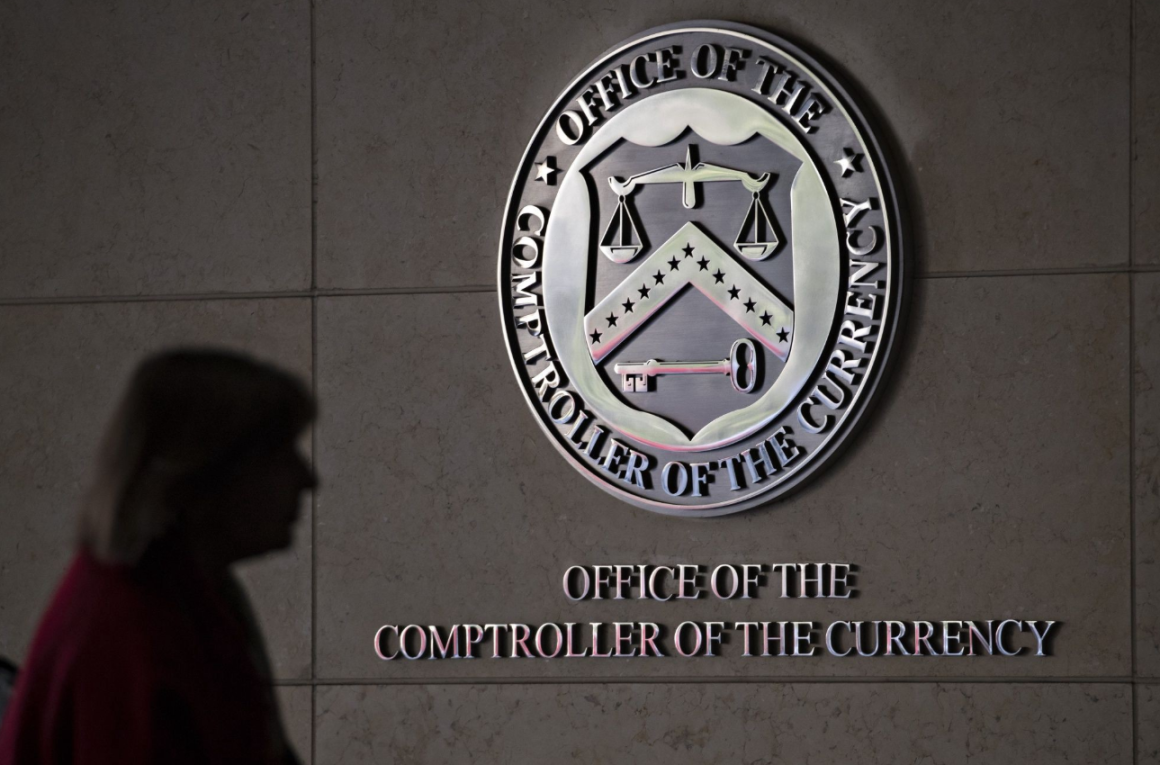
On March 5, the Hong Kong Monetary Authority (HKMA) signaled that the first batch of fiat-backed stablecoin licenses was entering the final countdown, with traditional financial institutions including HSBC and Standard Chartered reportedly leading the race. Three days later, the Office of the Comptroller of the Currency (OCC) in the United States released the implementation proposal for the GENIUS Act, establishing a comprehensive federal licensing and prudential regulatory framework for payment stablecoin issuers. Around the same time, British fintech firm BVNK obtained a crypto asset service provider license from the Malta Financial Services Authority, becoming one of the few institutions holding both MiCA-compliant status and access to European payment networks.
Across the Pacific, regulators in mainland China also sent clear signals. On February 6, eight Chinese ministries led by the People’s Bank of China jointly issued Document No. 42, bringing the tokenization of real-world assets (RWA) under the regulatory framework for the first time and clarifying a dual-track approach of “strict prohibition domestically, filing overseas”. In late March, the operational institutions of the digital yuan (e-CNY) launched a new round of expansion, with 12 commercial banks shortlisted, increasing the total number of operational institutions from 10 to 22. This marks the official entry of the digital yuan into the institutionalized Operation 2.0 era.
These three seemingly independent events reflect a single underlying trend: stablecoins are moving at breakneck speed from the “grey area” of the crypto world into the spotlight of the mainstream financial system. According to data from RWA.xyz, as of March 2026, the on-chain value of tokenized real-world assets — excluding stablecoins themselves — has surpassed $25 billion. Meanwhile, stablecoins have become the central “circulatory system” of this value migration: USDC alone recorded a monthly trading volume of $1.26 trillion, accounting for over 70% of total stablecoin activity.
Yet while capital crosses borders instantaneously, regulation remains territorially bounded. What exactly are the U.S., Hong Kong, and the EU competing for with their nearly simultaneous regulatory frameworks? What do their differences mean for businesses? Against the backdrop of the official launch of the digital yuan 2.0 era, how should Chinese companies chart their course in this regulatory race?
This is an institutional competition that will shape the landscape of global digital financial infrastructure for the next decade.
## I. United States: The “Federal Licensing” Model Prioritizing Market Efficiency
On February 25, 2026, the U.S. Office of the Comptroller of the Currency released a hundreds-of-pages proposal to implement the provisions of the GENIUS Act governing payment stablecoin issuance. The proposal marks the first time the U.S. has established clear federal-level rules for stablecoins — the privately issued version of the “digital dollar”.
Enacted into law on July 18, 2025, the GENIUS Act establishes a three-tier issuer structure for payment stablecoins:
1. Subsidiaries of insured depository institutions, approved by their primary federal regulator;
2. Federal qualified payment stablecoin issuers, directly approved by the OCC;
3. State qualified payment stablecoin issuers, approved by state regulators.
The inherent logic of this design is “diversified access” — it neither allows stablecoin issuance to fully detach from the traditional banking system nor restricts it to a small handful of institutions.
The OCC proposal further elaborates these rules. In terms of permissible activities, payment stablecoin issuers are limited to issuing and redeeming stablecoins, managing reserve assets, providing related custody services, and other activities that “directly support” these core functions. The OCC acknowledged ambiguity in the phrase “direct support” in the proposal, citing as an example that holding non-stablecoin crypto assets for testing distributed ledger technology or payment network transaction fees may be considered permissible “direct support” activity. This prudent “case-by-case clarification” approach reflects the regulator’s pragmatic stance toward technological innovation — setting boundaries while leaving room for exploration.
Most notable is the enforcement of the interest prohibition. The GENIUS Act itself bans stablecoin issuers from paying interest or yields to holders, but does not explicitly prohibit affiliates or “related third parties” from offering returns indirectly funded by the issuer — a detail that has sparked intense debate in the industry and Congress. The OCC proposal responds by establishing a rebuttable presumption that such arrangements violate the interest ban. It also clarifies that independent merchant discounts for stablecoin payments and profit-sharing in white-label partnerships fall outside this presumption, so long as they do not involve passing interest or yields to holders. Anti-evasion provisions are added, classifying any arrangement designed to circumvent the interest ban as a violation.
On reserve assets, the proposal requires issuers to maintain high-quality reserve assets at a ratio of at least 1:1. Eligible reserves include U.S. cash, demand deposits at insured depository institutions, short-term Treasury securities with maturities under 93 days, certain repurchase agreements, and registered government money market funds. Importantly, the proposal explicitly excludes stablecoins themselves and other crypto assets from qualifying reserves. Reserve assets are measured at fair value, while circulating stablecoins are measured at face value — meaning issuers must maintain reserves equal to the face value of all outstanding stablecoins even if they depeg in secondary markets.
The redemption mechanism is designed to anticipate extreme conditions. Standard redemptions must be processed within no more than 2 business days, but if redemption requests exceed 10% of total circulation within 24 hours, the period may be extended to 7 calendar days. This “automatic extension” mechanism serves as a preventive safeguard against bank run risks — granting issuers time to liquidate reserve assets and avoid systemic collapse from short-term liquidity shortages.
For capital requirements, newly approved issuers must comply with an initial capital framework, including a minimum capital requirement of at least $5 million during the initial regulatory period. This requirement frames stablecoin issuance in the U.S. as a regulated financial activity requiring substantial financial strength, rather than a light-touch, tech-driven product.
Anti-money laundering (AML) compliance is directly tied to license status. Issuers must provide board-level certification confirming they maintain an AML compliance framework in line with applicable laws. Failure to submit valid certification may result in revocation of issuance privileges. This design elevating compliance responsibility to the board aims to strengthen governance-level accountability.
Overall, the underlying logic of the U.S. model is to “sustain U.S. dollar dominance in the digital era”. By lowering compliance barriers to attract more issuers, banning interest to prevent stablecoins from becoming deposit substitutes, and extending oversight to global U.S. dollar stablecoins through foreign issuer provisions, the rules seek not to stifle innovation but to channel it into a controllable, supervisable framework while consolidating the dollar’s leading position in the global digital payment system.
## II. Hong Kong, China: The “Regulatory Extension” Model Connecting Chinese Assets
In Hong Kong, the pace of stablecoin regulation has been equally intense. The **Stablecoin Ordinance** took effect in August 2025, establishing one of the world’s strictest stablecoin regulatory regimes. In February 2026, Chief Executive John Lee revealed at the Consensus Hong Kong conference that the first batch of stablecoin issuer licenses would be formally issued in March. HKMA Chief Executive Eddie Yue disclosed review details: a total of 36 license applications were received, but the number of initial licenses “will definitely be small”, with the primary goal being system stability rather than quantity.
The strictness of the Hong Kong model manifests across multiple dimensions:
- Minimum paid-up capital of **HKD 25 million** — five times the U.S. requirement;
- 100% reserve requirement in highly liquid assets, held in Hong Kong;
- 24/7 anti-money laundering monitoring;
- Issuers must be entities incorporated in Hong Kong, with identifiable management and physical offices.
Combined, these requirements create a high entry barrier — excluding small and medium-sized crypto firms and ensuring only reputable, well-resourced traditional financial institutions can participate.
This explains why early front-runners for the first licenses are banking giants such as HSBC, Standard Chartered, and Bank of China Hong Kong. Standard Chartered Group launched integrated digital asset trading services for institutional clients as early as July 2025, with its U.K. branch offering spot trading of Bitcoin and Ethereum. Through its subsidiaries Zodia Custody, Zodia Markets, and Libeara, Standard Chartered provides digital asset custody, trading, and tokenization services, building end-to-end capabilities from issuance to custody.
The core design philosophy of Hong Kong’s regulatory framework is to “integrate stablecoin issuance into traditional financial regulation”. Stablecoins are treated as an extension of “electronic money” rather than an entirely new asset class. Issuers must comply with the same strict AML and counter-terrorist financing rules as traditional financial institutions; reserve assets must be held in segregated custody and disclosed regularly; licensed institutions are subject to ongoing HKMA supervision.
Hong Kong’s stance on foreign stablecoins is equally clear. Eddie Yue emphasized that even stablecoins compliant with overseas regulations must obtain a Hong Kong license to conduct retail business in the city. Foreign stablecoins without a Hong Kong license may not be marketed to retail investors. This “local licensing” principle anchors the stablecoin ecosystem firmly within Hong Kong’s regulatory system, preventing the spillover of cross-border risks.
The deep strategic intent of the Hong Kong model is to become a **strategic hub** connecting mainland Chinese assets to global digital capital markets. This was strongly validated on February 26, 2026, when the Digital Currency Institute of the People’s Bank of China and the Hong Kong Monetary Authority jointly launched a dedicated pilot for cross-border RWA settlement using the digital yuan, successfully enabling real-time exchange and clearing between the digital yuan and soon-to-be-licensed Hong Kong stablecoins.
The pilot focused on two real-economy scenarios: cross-border infrastructure and agricultural trade. Under traditional models, cross-border payments involve multiple intermediary banks, take roughly 2 hours, and carry high foreign exchange costs. In the pilot, the process was compressed to 3 minutes, with exchange costs reduced by over 20%. The technical breakthrough behind this is **atomic swap** — the locking of digital yuan and minting of equivalent stablecoins occur simultaneously, eliminating counterparty credit risk entirely.
This dual-track synergy model of “digital yuan + Hong Kong stablecoins” forms a clear division of labor:
- The digital yuan acts as the **value anchor and compliance channel**, ensuring legal credit backing and traceability for capital flows;
- Hong Kong-regulated stablecoins serve as the **liquidity bridge**, connecting global digital financial markets with 24/7 uninterrupted trading.
Fan Wenzhong, Vice President of the Beijing Academy of Social Sciences, defined this as a brand-new “public-private partnership” architecture — combining the security and compliance of sovereign currency with the efficiency and flexibility of market-driven innovation.
For mainland enterprises, this synergy model establishes a clear, compliant path for RWA internationalization. Project revenue rights from cross-border infrastructure, supply chain finance assets from agricultural trade, green carbon credits, and commercial property income rights can all enter the system via the digital yuan as a compliant gateway, then be tokenized, fractionalized, and circulated globally through Hong Kong’s stablecoin ecosystem.
## III. European Union: The “Comprehensive Prudential” Model with Rules Ahead of the Curve
Across the Atlantic, the EU has taken a different approach. In June 2025, the European Banking Authority (EBA) issued a no-action letter clarifying the interaction between MiCA (Markets in Crypto-Assets) and PSD2 (Payment Services Directive 2). This seemingly technical document revealed a major regulatory challenge: starting March 2, 2026, crypto asset service providers offering custody and transfer services for electronic money tokens may need to hold **both a MiCA crypto license and a PSD2 payment services license**.
This means a single business activity would fall under two regulatory frameworks, with two sets of capital requirements and two layers of compliance costs. MiCA mandates a minimum capital of €125,000 for crypto asset service providers, while a PSD2 payment services license also requires €125,000 — combining for €250,000, nearly $290,000. With dual reporting and dual supervisory fees, total compliance costs nearly double.
Patrick Hansen, EU Policy Lead at Circle, warned on social media that failing to resolve the conflict between MiCA and PSD2 would deal a major blow to the EU’s digital financial competitiveness. He noted that this dual-license trap violates the EU’s principles of proportionality, legal certainty, and consistency, running counter to efforts to streamline regulation and boost competitiveness.
The root of this conflict lies in MiCA’s design logic: it seeks to create a unified rulebook for crypto assets, but overlaps with existing payment services directives for custody and transfer of electronic money tokens. The EBA acknowledged that financial activities should be governed by a single legal framework, yet MiCA and PSD2 currently both regulate stablecoin custody and transfer services.
The EBA proposed two legislative fixes:
1. Amend MiCA to incorporate relevant payment service provisions from PSD2, creating a single framework for electronic money token activities;
2. Revise the upcoming PSD3 and Payment Services Regulation to exempt MiCA licensees from separate payment services authorization for electronic money token custody and transfer.
Legislative proceedings for PSD3 are ongoing, with passage expected after 2025 — leaving policymakers a narrow window to add targeted exemptions before the March 2026 deadline.
The EU model is essentially **rules-first**: building a comprehensive, value-chain-wide regulatory system before the industry fully matures. Its strength lies in high regulatory certainty — compliance grants seamless access across all 27 member states. Its weakness is high compliance costs and slow adjustment cycles, which may dampen early-stage innovation.
But the EU’s ambitions extend beyond regulation. The case of BVNK illustrates this point. Founded in 2021, BVNK is a stablecoin payment infrastructure firm headquartered in London, holding electronic money institution licenses in the U.K. and EU, plus money transmitter licenses in multiple U.S. states. In 2025, BVNK’s transaction processing volume exceeded $20 billion, covering more than 130 countries and regions. On March 17, Mastercard announced the acquisition of BVNK for $1.8 billion — its largest digital asset acquisition to date.
BVNK’s appeal lies in its full-stack enterprise-grade solution: APIs, wallet management, compliance risk control, and liquidity management, lowering the barrier for businesses to adopt stablecoins. It supports stablecoin sending, receiving, exchange, and storage across all major blockchains, with fiat on/off ramps for USD, EUR, and GBP, primarily serving cross-border B2B settlement, cross-border payroll, and corporate stablecoin issuance. This “compliance-first, tech-driven” model is precisely what the EU regulatory framework aims to foster: sustainable innovation within clearly defined rules. Mastercard’s acquisition confirms traditional financial giants’ strategic bets on stablecoin infrastructure — in 2024, Stripe bought stablecoin firm Bridge for $1.1 billion, Visa made a strategic investment in BVNK, and legacy payment leaders are all doubling down.
## IV. Convergence Amid Divergence: Consensus on Five Core Principles
Viewing the three regulatory frameworks side by side, differences are obvious. The U.S. prioritizes market efficiency, allowing diverse issuers at the cost of a $5 million minimum capital requirement and strict interest ban. Hong Kong extends traditional financial regulation, restricting issuers to licensed financial institutions with HKD 25 million minimum capital and reserves held locally. The EU applies comprehensive prudential regulation, with €250,000 in dual capital requirements and complex overlap between MiCA and PSD2.
Beneath these differences, however, **five core principles are gaining global consensus**:
1. **1:1 Reserve Principle** — All three frameworks require issuers to hold reserve assets equal to outstanding stablecoins to guarantee on-demand redemption.
2. **Reserve Segregation Principle** — Reserves must be segregated from issuers’ own assets to prevent misappropriation.
3. **No Interest Prohibition** — Issuers are banned from paying interest or yields to stablecoin holders, clarifying stablecoins as payment instruments, not investment products.
4. **AML Compliance** — Strict KYC, transaction recording, and reporting obligations are universally required.
5. **Consumer Protection** — Holder interests are safeguarded through reserve rules, disclosure requirements, and redemption rights.
This pattern of “convergent principles, divergent details” essentially reflects jurisdictions competing for **regulatory governance power** — those that offer lower compliance costs and more flexible operating space without sacrificing financial stability will gain an edge in the next decade of digital finance.
For Chinese companies, understanding this divergence and convergence is itself a strategic capability.
In March 2026, as the stablecoin regulatory frameworks of the three major economies take effect nearly simultaneously, we are witnessing a historic moment: the “Warring States era” of digital finance is ending, and a rules-based “new order” is taking shape.
The U.S. has chosen efficiency first — letting market forces drive innovation while preserving dollar dominance. Hong Kong has chosen regulatory extension — underwriting digital assets with traditional financial prudence to act as a bridge between China and the world. The EU has chosen rules first — setting high-standard boundaries to position itself as a global rule-maker.
None of these three approaches is inherently right or wrong; they simply match different resource endowments and strategic goals. For Chinese companies, however, understanding these differences is strategically critical. Between the institutionalized operation of the digital yuan 2.0 and the compliant channel of Hong Kong stablecoin licenses, a “fast track” connecting high-quality mainland assets to global digital capital has been built.
As Mastercard’s acquisition of BVNK reveals, stablecoins are no longer a niche crypto experiment — they are the foundation of the next-generation global payment network. Those who find their course in this regulatory race will seize the initiative in the wave of digital civilization. The starting point of that course is understanding the rules; its end is shaping them.
(Data sources: official announcements by the People’s Bank of China, original OCC proposal, 21st Century Business Herald, Economic Herald, Mobile Payment Network, The National Law Review legal analysis, Economic Weekly. All data as of March 2026.)
**Disclaimer**
The market is subject to risks, and investment involves caution. This article does not constitute investment advice. Users should consider whether any opinions, views, or conclusions in this article are suitable for their specific circumstances. Investment decisions based on this article are made at one’s own risk.
Contact: Sarah
Phone: +1 6269975768
Tel: +1 6269975768
Email: xttrader777@gmail.com
Add: 250 Consumers Rd, Toronto, ON M2J 4V6, Canada



 +1 6269975768
 微信
微信 Teams
Teams